Technology Support And Maintenance Services
Protect your digital assets with proactive technology support and maintenance services built for uptime, security, and growth.
Protect your digital assets with proactive technology support and maintenance services built for uptime, security, and growth.


Every minute of unplanned downtime costs revenue, erodes customer trust, and disrupts operations. Legacy systems grow fragile. Security vulnerabilities multiply. Internal teams, already stretched across strategic projects, struggle to keep pace with patching cycles, performance tuning, and infrastructure monitoring. The challenge is not just fixing what breaks; it is preventing breakdowns before they reach your end users.
TAV Tech Solutions delivers managed technology support and maintenance services that combine proactive monitoring, SLA-driven incident resolution, and continuous optimization. From application support and maintenance to cloud infrastructure management, the approach blends AI-powered diagnostics with certified engineering talent. The result is measurable: higher uptime, lower total cost of ownership, and IT operations that scale alongside your business priorities.




Keep business-critical applications stable with L1, L2, and L3 support tiers covering bug resolution, performance tuning, and feature enhancements. Structured SLAs ensure rapid incident response, reducing mean time to repair and safeguarding user productivity across web, mobile, and enterprise platforms.

Maintain peak performance on AWS, Azure, and Google Cloud through automated monitoring, resource optimization, and proactive patch management. Scheduled maintenance windows, capacity planning, and cost governance help you extract maximum value from cloud investments without service disruption.

Move beyond reactive break-fix models with predictive maintenance powered by AI-driven diagnostics. Continuous health checks, anomaly detection, and automated alerting identify potential failures before they cascade. This data-driven strategy dramatically cuts unplanned downtime and extends asset lifecycles.

Eliminate security blind spots with systematic patch management across operating systems, middleware, and applications. Vulnerability scanning, risk-based prioritization, and verified deployment ensure compliance with industry regulations while closing exploitation windows that threaten business continuity.

Ensure data integrity and query performance with ongoing database support for SQL Server, PostgreSQL, MySQL, MongoDB, and Oracle. Services include index tuning, backup verification, replication monitoring, and capacity forecasting to keep data layers responsive under growing transactional loads.

Extend the operational life of legacy platforms through stabilization, performance hardening, and incremental modernization. Wrapper APIs, middleware integrations, and phased migration plans let you modernize at a sustainable pace without disrupting existing revenue-generating workflows or user experiences.

Keep deployment pipelines healthy with ongoing maintenance of Jenkins, GitLab CI, GitHub Actions, and Terraform configurations. Pipeline audits, dependency updates, environment drift remediation, and build optimization ensure reliable, fast software delivery across development and production environments.

Deliver frictionless employee experiences with tiered IT helpdesk services covering hardware, software, connectivity, and access management. Multi-channel intake through ticketing portals, chat, email, and phone ensures rapid resolution. Knowledge base maintenance drives self-service adoption and deflects recurring tickets across global teams.
Gain full-stack visibility through integrated monitoring with Datadog, New Relic, Grafana, and custom dashboards. Real-time alerting, root cause analysis, and monthly executive reporting translate operational metrics into business intelligence, enabling data-driven decisions about capacity and technology investments.

Banks and financial institutions face stringent regulatory requirements alongside zero-tolerance uptime expectations. Technology support and maintenance services ensure transaction processing platforms, fraud detection engines, and digital banking applications remain compliant, secure, and performant. Proactive monitoring detects anomalies in payment gateways before they affect customer transactions. Regular patching cycles close vulnerabilities mandated by PCI DSS and SOX regulations.
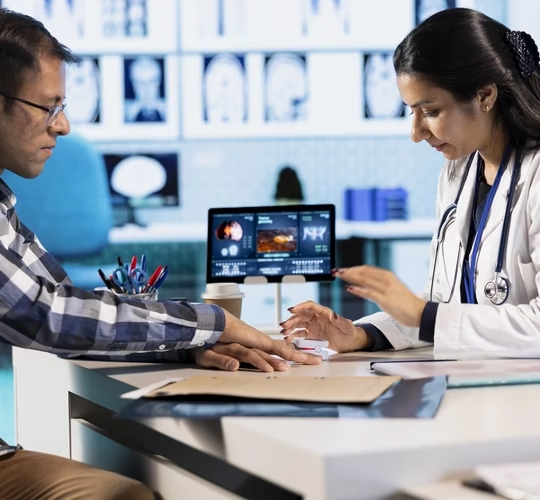
Electronic health record systems, telemedicine platforms, and clinical research applications demand uninterrupted availability. IT support and maintenance services protect patient data integrity through HIPAA-aligned security patching and backup verification. Predictive maintenance prevents equipment interface failures that could delay diagnostics. Ongoing application support ensures seamless integrations between laboratory systems, pharmacy networks, and patient portals.

Online storefronts and omnichannel retail platforms experience seasonal traffic spikes that stress infrastructure. Managed IT maintenance delivers auto-scaling configurations, CDN optimization, and database performance tuning to maintain fast page loads during peak demand. Security patching protects customer payment data. Continuous monitoring of checkout flows prevents cart abandonment caused by backend errors or slow API responses.

ERP systems, IoT sensor networks, and supply chain management platforms form the digital backbone of modern manufacturing. Software maintenance services keep production scheduling systems accurate and warehouse management applications synchronized. Preventive maintenance on industrial IoT infrastructure reduces unplanned production line stops. Integration support ensures real-time data flow between floor sensors, quality systems, and enterprise dashboards.

Network management systems, billing platforms, and customer self-service portals require 24/7 operational continuity. Technology maintenance outsourcing provides tiered support that resolves subscriber-impacting incidents within aggressive SLA windows. Infrastructure monitoring covers core network elements, OSS/BSS stacks, and edge computing nodes. Regular capacity reviews align platform performance with subscriber growth forecasts.

Learning management systems, virtual classroom platforms, and student information systems must remain available across global time zones. Application support and maintenance ensures smooth content delivery, video streaming stability, and assessment platform integrity during high-enrollment periods. Security updates protect sensitive student records. Helpdesk services assist educators with technical onboarding and classroom technology troubleshooting.
Fleet management platforms, route optimization engines, and warehouse robotics systems depend on real-time data accuracy. IT support services maintain GPS tracking reliability, API integrations with shipping carriers, and automated dispatch workflows. Proactive infrastructure maintenance prevents data latency issues that distort delivery timelines. Disaster recovery testing ensures logistics continuity during regional outages.
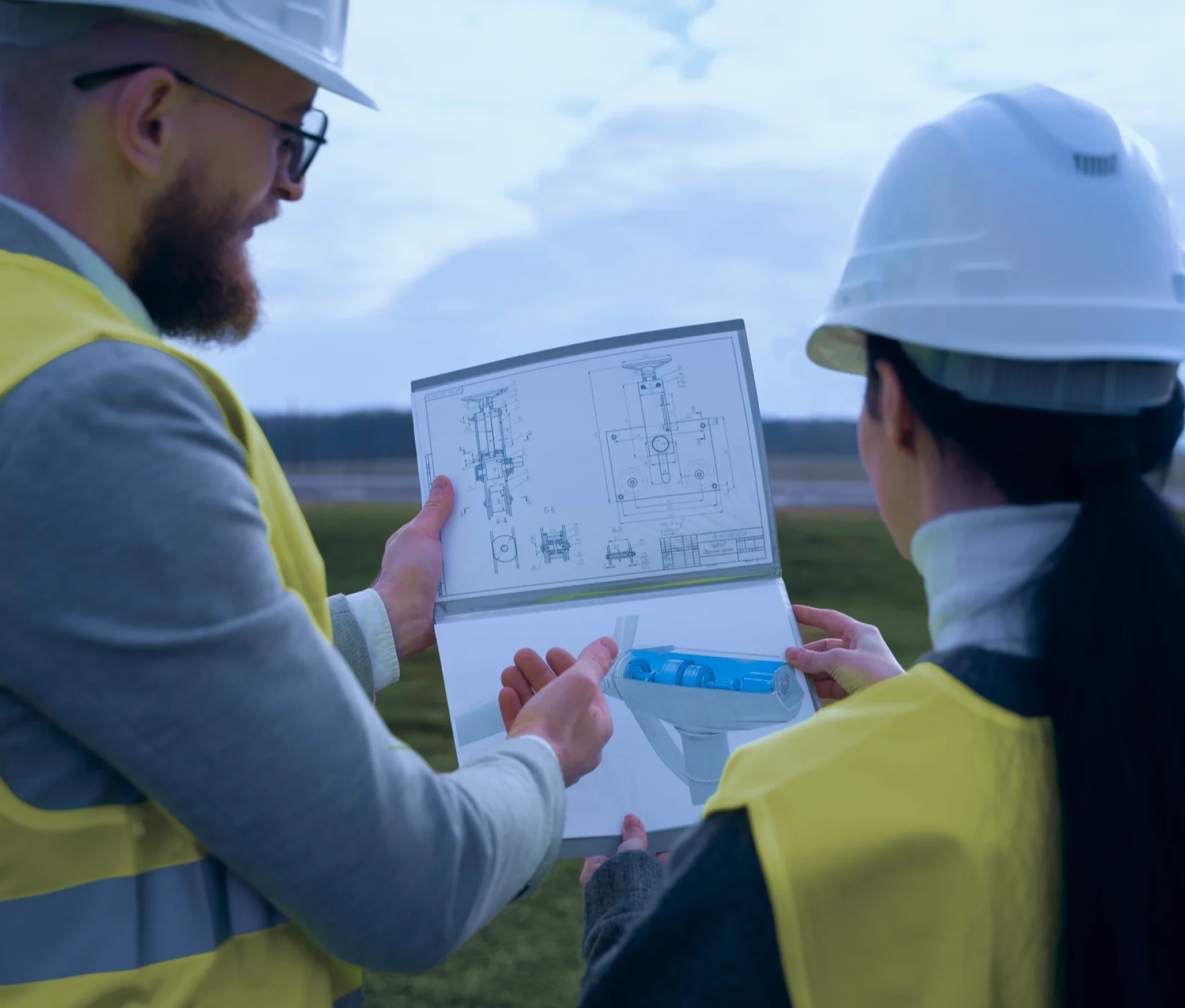
SCADA systems, smart grid platforms, and energy trading applications operate in high-security environments with strict compliance mandates. Managed technology support ensures continuous monitoring of critical control systems and rapid incident escalation. Patch management follows change-controlled windows that protect operational technology environments. Performance optimization maintains grid analytics responsiveness during peak demand cycles.
Certified engineers delivering enterprise-grade support across platforms, clouds, and frameworks with measurable SLA performance.

Certified architects managing workloads across AWS, Azure, and GCP with Infrastructure-as-Code automation, cost optimization dashboards, and cross-cloud failover strategies. Expertise spans compute, storage, networking, serverless, and container orchestration with Kubernetes and ECS.
Deep experience supporting SAP, Oracle E-Business Suite, Microsoft Dynamics, Salesforce, and custom-built enterprise platforms. Services include configuration management, release coordination, regression testing, and performance benchmarking against SLA-defined thresholds.
Security operations covering SIEM management, endpoint detection and response, vulnerability assessments, and penetration testing. Compliance-aligned support for GDPR, HIPAA, PCI DSS, SOC 2, and ISO 27001 ensures audit readiness. Incident response playbooks reduce mean time to containment.
Production-grade support for relational and NoSQL databases including SQL Server, PostgreSQL, MySQL, Oracle, MongoDB, and DynamoDB. Services span performance tuning, replication management, automated backup verification, disaster recovery testing, and migration planning.
SRE-aligned operational practices using Terraform, Ansible, Jenkins, GitLab, and ArgoCD. Expertise includes toil reduction, error budget management, chaos engineering, and observability stack maintenance with Prometheus, Grafana, ELK, and Datadog.
Deploying machine learning models for anomaly detection, event correlation, and automated root cause analysis. AIOps platforms reduce alert noise by up to 90%, accelerate incident triage, and enable predictive capacity planning that prevents outages before they materialize.
Nine measurable advantages that set our technology support and maintenance services apart from conventional providers.
TAV Tech Solutions has earned several awards and recognitions for our contribution to the industry


No posts found.
This guide helps CTOs, IT directors, and procurement leaders evaluate, select, and optimize technology support and maintenance services for their organizations.
Begin by mapping existing support processes against industry frameworks such as ITIL and COBIT. Identify recurring incident categories, average resolution times, and total cost of downtime. Benchmark your current mean time to repair against industry medians for your sector. This baseline reveals whether internal capabilities meet operational demands or whether managed IT maintenance represents a stronger path to stability and scale.
In-house support provides direct control but carries fixed headcount costs, training overhead, and attrition risk. Outsourced technology support and maintenance services deliver elastic capacity, broader skill coverage, and contractual accountability. Hybrid models, where strategic functions remain internal while routine operations are outsourced, often yield the best balance of control and efficiency for mid-market and enterprise organizations.
Not every system requires the same response urgency. Map applications to business impact tiers. Revenue-generating platforms merit aggressive SLAs with 15-minute acknowledgment and 4-hour resolution targets. Internal productivity tools may require standard business-hours coverage. Tiered SLA structures optimize cost without compromising protection for critical assets. Ensure SLAs include uptime guarantees, escalation protocols, and penalty clauses.
Shortlist providers based on certifications, industry references, and technical depth. Request case studies that demonstrate measurable outcomes, not generic capability decks. A credible IT maintenance and support provider will demonstrate communication cadence, reporting transparency, and willingness to integrate with your existing toolchains. Cultural alignment in areas such as urgency handling, documentation rigor, and continuous improvement mindset is often the differentiator between adequate and exceptional partnerships.
A strong support partner does more than maintain the status quo. Evaluate whether the provider offers modernization pathways, including legacy system stabilization, cloud migration support, and architecture advisory services. Technology support and maintenance should serve as a bridge toward your future-state architecture, not an anchor to outdated platforms. Roadmap alignment between your transformation goals and the provider strategy is essential.
Establish KPIs that connect support metrics to business outcomes. Track cost-per-ticket, first-contact resolution rate, system availability, and incident recurrence trends. Monthly executive dashboards should translate operational data into financial impact. Governance frameworks with quarterly business reviews ensure the partnership evolves alongside your technology estate and business objectives. Continuous feedback loops drive sustained value delivery.
A standard engagement covers incident management, proactive monitoring, security patching, performance optimization, backup verification, and scheduled maintenance. Scope is tailored to your technology stack and business priorities, with clear SLAs defining response and resolution commitments. Choosing a proven software support and maintenance company ensures consistent delivery aligned to your operational needs.
Support follows a tiered model. L1 handles basic troubleshooting and ticket triage. L2 addresses configuration issues, application errors, and system diagnostics. L3 provides deep engineering support for complex infrastructure problems, code-level fixes, and architecture advisory. Each tier has defined escalation protocols and SLA targets.
SLA options range from standard business-hours coverage with next-business-day resolution to premium 24/7 support with 15-minute acknowledgment and 4-hour resolution for critical incidents. SLA-driven technology support ensures custom tiers can be configured based on application criticality, user impact, and regulatory requirements.
Proactive IT maintenance solutions identify and remediate issues before they cause outages. Automated monitoring detects performance degradation, capacity constraints, and security vulnerabilities early. Preventive IT maintenance through scheduled health checks and patch cycles ensures organizations typically see 30-50% reduction in emergency incident costs and 15-25% improvement in system asset lifecycles.
Yes. Our managed IT maintenance teams hold certifications across AWS, Microsoft Azure, and Google Cloud Platform. We support hybrid architectures spanning on-premise data centers and public cloud, including container orchestration with Kubernetes, serverless workloads, and multi-cloud networking configurations.
Core industry verticals include financial services, healthcare, retail and e-commerce, manufacturing, telecommunications, logistics, energy, and education. Each vertical has dedicated practice leads who understand sector-specific compliance frameworks, operational patterns, and technology ecosystems.
Legacy system support includes stabilization, performance hardening, security patching for end-of-life platforms, and incremental modernization. Wrapper APIs and middleware layers enable integration with modern systems while maintaining legacy functionality. Phased migration roadmaps help organizations transition without disrupting active business processes.
Typical onboarding takes 2-6 weeks depending on environment complexity. The process includes discovery and documentation audits, knowledge transfer sessions, shadow operations alongside incumbent teams, and a parallel-run period before full transition. Accelerated onboarding is available for organizations with well-documented environments.
All maintenance activities follow least-privilege access controls, encrypted remote sessions, and role-based authentication. Engineers access client environments through approved VPN tunnels and privileged access management platforms. SOC 2 Type II certification, regular penetration testing, and background-verified personnel provide layered security assurance.
We deploy and manage industry-leading monitoring platforms including Datadog, New Relic, Grafana, Prometheus, PagerDuty, Nagios, and Splunk. Tool selection is based on your existing stack, integration requirements, and observability maturity. Custom dashboards provide real-time visibility into application, infrastructure, and network health.
Pricing models include fixed monthly retainers, time-and-materials billing, and outcome-based arrangements tied to SLA performance. Fixed retainers suit predictable workloads while T&M accommodates variable demand. Blended models combining dedicated capacity with on-demand surge access offer the best IT maintenance cost optimization for most enterprise clients.
Yes. Our transition management framework handles vendor migration with minimal disruption. We conduct thorough documentation audits, replicate existing monitoring configurations, establish parallel-run operations, and execute a controlled cutover. Non-disclosure agreements and data handling protocols protect your intellectual property throughout the transition.
Standard reporting includes weekly operational summaries, monthly SLA performance dashboards, and quarterly business reviews. Reports cover ticket volumes, resolution trends, uptime metrics, security posture, and cost analysis. Executive dashboards translate operational data into business impact language suitable for board-level discussions.
Organizations that outsource technology support and maintenance typically achieve 30-40% cost savings compared to equivalent in-house teams when factoring in recruitment, training, tooling, and attrition costs. Additional advantages include immediate access to certified specialists, elastic scaling, 24/7 coverage without shift management complexity, and contractual performance accountability.
Yes. Our application maintenance services cover custom applications built on diverse technology stacks including Java, .NET, Python, Node.js, React, Angular, and mobile frameworks. Our engineers review source code repositories, set up staging environments, and establish CI/CD pipelines to deliver structured bug fixes, feature enhancements, and version upgrades.
Disaster recovery support includes regular backup verification, recovery testing, failover automation configuration, and documented recovery runbooks. We conduct scheduled DR drills to validate recovery time objectives and recovery point objectives. Post-drill reports identify gaps and recommend improvements to strengthen your business continuity posture.
Critical incidents trigger automated escalation through PagerDuty or Opsgenie. On-call engineers respond within SLA-defined acknowledgment windows, typically 15 minutes for P1 severity. Our 24/7 IT support and maintenance services model ensures war-room protocols coordinate cross-functional response for major incidents. Real-time status updates keep stakeholders informed until service restoration is confirmed.
Absolutely. Technology support services for enterprises are designed with elastic scaling in mind, allowing you to grow from a small support pod to a full managed services operation within weeks. Predefined role profiles and bench capacity ensure fast ramp-up. Seasonal scaling for retail peaks, product launches, or geographic expansions is built into engagement planning at no structural premium.
AI-powered IT operations, known as AIOps, automates event correlation, anomaly detection, and root cause identification. Machine learning models trained on historical incident data predict failures before they impact users. Chatbot-driven ticket deflection handles routine queries. AI reduces mean time to detection by up to 70% and alert noise by up to 90%.
Begin with a no-obligation discovery consultation where our solutions architects assess your current environment, document pain points, and recommend a tailored support framework. Following scope alignment and SLA agreement, onboarding begins with knowledge transfer and parallel-run operations before full service transition.
Let’s connect and build innovative software solutions to unlock new revenue-earning opportunities for your venture


We would love to hear from you

5th Floor, DLF Two Horizon Centre, DLF Phase 5, Gurugram, HR 122002


