Keras Support and Maintenance Services
Protect your deep learning investments with proactive Keras support and maintenance services that ensure model accuracy, uptime, and scalability.
Protect your deep learning investments with proactive Keras support and maintenance services that ensure model accuracy, uptime, and scalability.
TAV Tech Solutions delivers Keras support and maintenance services to enterprises across North America, Europe, Middle East, and Asia-Pacific regions.


Deep learning models built on the Keras framework require continuous monitoring, retraining, and optimization after initial deployment. Without dedicated Keras maintenance services, neural network accuracy degrades as input data distributions shift over time. Organizations running production inference pipelines face rising latency, declining prediction quality, and unplanned downtime. These challenges directly erode the return on investment that justified deep learning adoption initially.
TAV Tech Solutions provides end-to-end Keras support services covering model performance monitoring, scheduled retraining cycles, framework version upgrades, and production incident resolution. Our engineers work across TensorFlow, JAX, and PyTorch backends supported by Keras 3. Clients receive structured SLA-based support that reduces model drift, eliminates unplanned outages, and sustains inference accuracy. This approach keeps your deep learning applications competitive and operationally stable.



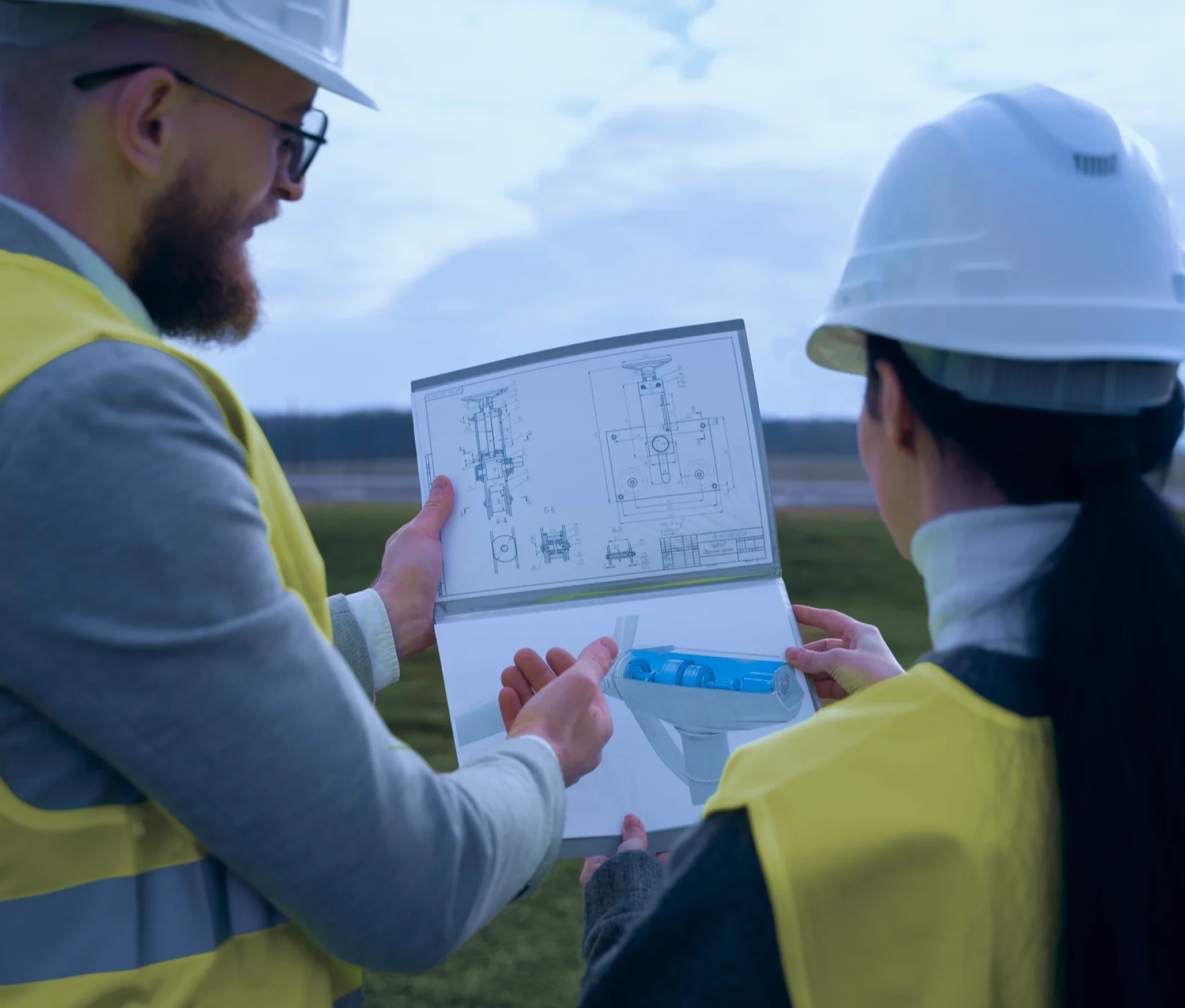
Continuous tracking of inference latency, prediction accuracy, and throughput metrics across production Keras deployments. Automated alerting detects anomalies in model behavior before they impact downstream applications. This Keras support service ensures your neural networks maintain baseline accuracy targets consistently.

Scheduled and event-driven retraining pipelines that refresh Keras model weights using updated datasets. Engineers validate retrained models against holdout sets before promoting to production. Keras model retraining services prevent accuracy decay caused by concept drift and changing data distributions.

| Migration from legacy Keras 2 to Keras 3 with multi-backend support across TensorFlow, JAX, and PyTorch. Our team handles API deprecation resolution, dependency updates, and regression testing. Framework upgrades keep your codebase current and compatible with evolving ecosystem tools. |

| Pruning, quantization, and knowledge distillation techniques reduce model size and accelerate inference without meaningful accuracy loss. Keras model optimization services target deployments on cloud GPUs, edge devices, and mobile platforms. Optimized models lower compute costs while maintaining prediction quality. |

| Rapid diagnosis and remediation of production failures including memory leaks, GPU utilization spikes, and inference pipeline crashes. Keras production support teams restore service within defined SLA windows. Root cause analysis prevents recurrence and strengthens deployment resilience across environments. |

| Ongoing maintenance of REST and gRPC endpoints serving Keras model predictions to downstream applications. Keras API support services cover endpoint versioning, payload schema changes, and throughput scaling. Stable integrations ensure consuming applications receive reliable inference results without interruption. |

Proactive application of security updates to Keras dependencies including TensorFlow, NumPy, and underlying system libraries. Vulnerability scanning identifies exposed attack surfaces in model serving infrastructure. Security patch management protects sensitive training data and proprietary model architectures from exploitation.

| Support for preprocessing pipelines that feed production Keras models including feature engineering, normalization, and augmentation layers. Engineers troubleshoot data ingestion failures, schema mismatches, and storage bottlenecks. Reliable data pipelines ensure models always receive properly formatted input for accurate predictions. |
| End-to-end governance of model versions from development through staging to production retirement. Keras model lifecycle management includes version control, A/B testing coordination, and deprecation workflows. Structured lifecycle processes reduce technical debt and maintain auditability across your model portfolio. |

Maintenance across TensorFlow, JAX, and PyTorch backends enabled by Keras 3 architecture. Engineers resolve backend-specific compatibility issues, optimize execution graphs, and manage device placement strategies. Multi-backend Keras support gives you flexibility to leverage the strongest framework for each workload.
Ongoing fine-tuning and maintenance of pretrained models adapted to your domain-specific datasets. Engineers monitor transfer learning model accuracy and trigger retraining when performance thresholds are breached. This service accelerates time to value for image classification, text analysis, and speech recognition applications.

Maintenance of Keras models deployed on AWS SageMaker, Google Cloud Vertex AI, and Microsoft Azure ML. Cloud deployment support covers auto-scaling configuration, cost optimization, and infrastructure monitoring. Engineers ensure your cloud-hosted deep learning models operate efficiently within defined budget parameters.

Medical imaging models built on Keras require continuous validation as clinical protocols evolve and new imaging hardware enters service. Keras maintenance services ensure diagnostic classifiers maintain regulatory-compliant accuracy levels. Ongoing support covers HIPAA-aligned deployment monitoring, retraining against updated patient cohorts, and version-controlled model updates for radiology and pathology applications.

Fraud detection and credit scoring models face rapidly shifting transaction patterns that cause prediction drift. Keras support services provide scheduled retraining against fresh financial datasets while maintaining model explainability for audit requirements. Banks and fintech companies rely on proactive monitoring to keep neural network models compliant with Basel and regulatory frameworks.
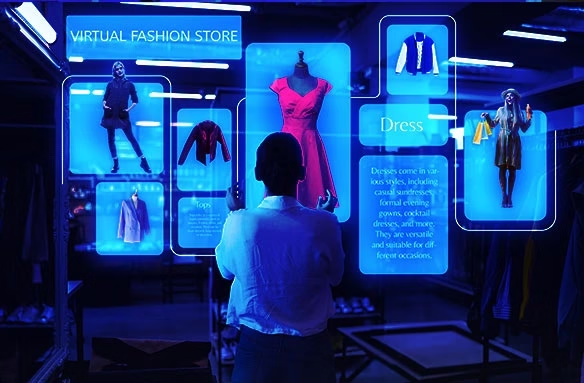
Recommendation engines and demand forecasting models degrade quickly when consumer behavior shifts seasonally. Keras model maintenance keeps product recommendation accuracy high through regular retraining cycles aligned with catalog updates and purchasing trends. Retailers achieve sustained conversion rates by ensuring their deep learning systems reflect current inventory and shopper preferences.

Visual inspection and predictive maintenance models operate in environments where equipment wear patterns change over months. Keras support services recalibrate defect detection classifiers as production lines evolve and new product variants are introduced. Continuous model optimization reduces false positive rates and prevents costly misclassification in quality control workflows.

Network anomaly detection and customer churn models process massive data volumes that shift with subscriber behavior and infrastructure changes. Keras maintenance services retrain signal classification models as network topologies expand. Telecom operators benefit from SLA-driven support that keeps deep learning models responsive to evolving traffic patterns and service quality standards.

Load forecasting and grid optimization models require frequent updates as renewable energy sources introduce variable generation patterns. Keras support engineers recalibrate time-series forecasting models against seasonal consumption data and weather feeds. Energy providers maintain grid stability by ensuring their predictive models accurately reflect current supply and demand dynamics.
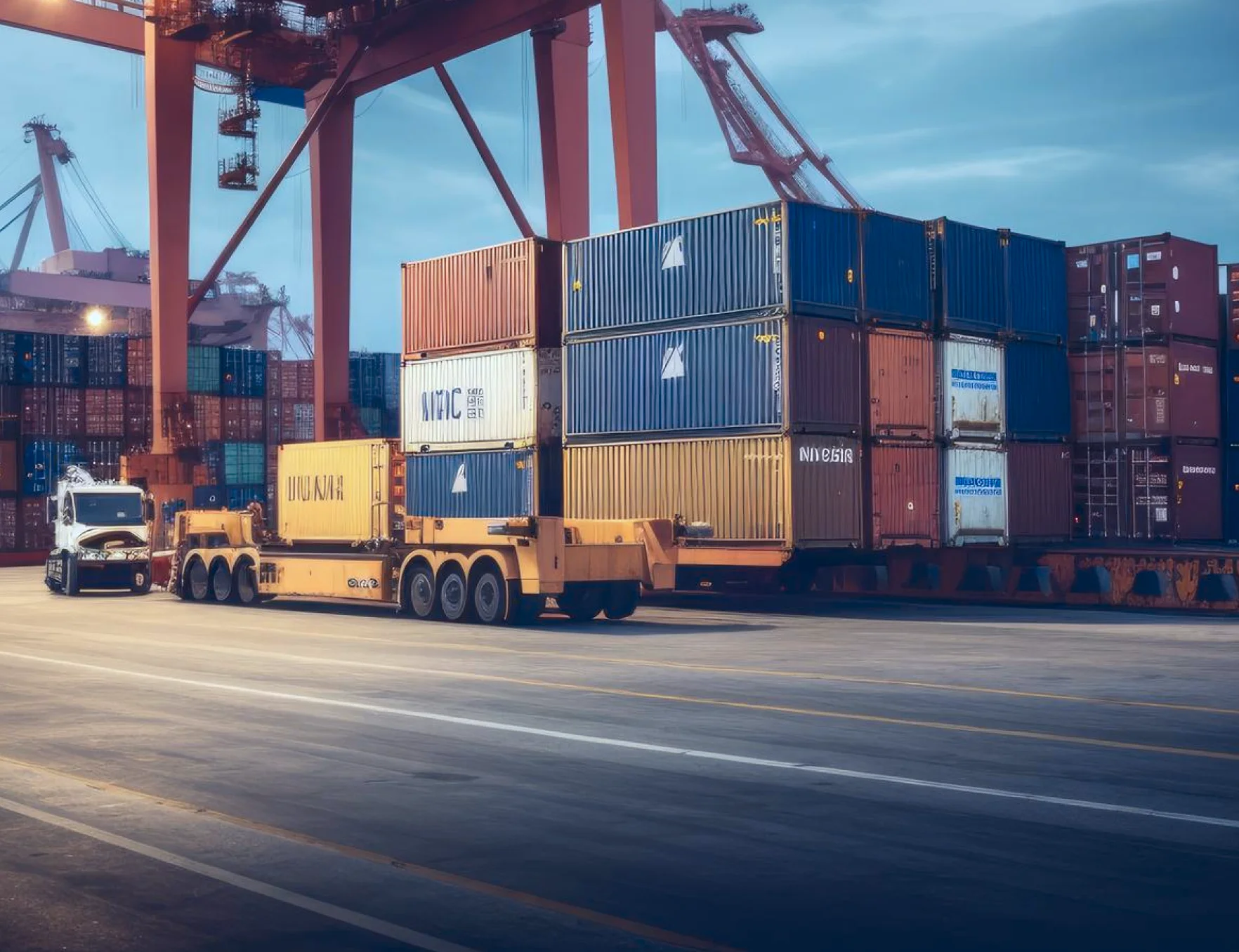
Route optimization and warehouse automation models lose effectiveness when distribution networks expand or contract. Keras model retraining services update logistics algorithms to reflect current warehouse layouts, carrier availability, and demand signals. Supply chain operators maintain delivery accuracy and reduce fulfillment costs through consistently optimized deep learning predictions.

Advanced driver assistance and autonomous perception systems demand zero tolerance for model degradation. Keras maintenance services validate computer vision classifiers against new driving scenarios, weather conditions, and sensor configurations. Automotive engineers rely on continuous support to ensure safety-critical deep learning components meet functional safety standards.

Content recommendation and moderation models must adapt to evolving viewer preferences and shifting content policies. Keras support services retrain recommendation engines as catalogs expand and engagement patterns change. Entertainment platforms maintain viewer retention by ensuring deep learning systems surface relevant content across diverse audience segments and devices.

Crop disease detection and yield prediction models face changing environmental conditions each growing season. Keras maintenance services recalibrate image classifiers trained on drone and satellite imagery to reflect current crop conditions. Agricultural enterprises improve harvest planning and resource allocation by keeping their deep learning models synchronized with field-level data.
Medical imaging models built on Keras require continuous validation as clinical protocols evolve and new imaging hardware enters service. Keras maintenance services ensure diagnostic classifiers maintain regulatory-compliant accuracy levels. Ongoing support covers HIPAA-aligned deployment monitoring, retraining against updated patient cohorts, and version-controlled model updates for radiology and pathology applications.
Fraud detection and credit scoring models face rapidly shifting transaction patterns that cause prediction drift. Keras support services provide scheduled retraining against fresh financial datasets while maintaining model explainability for audit requirements. Banks and fintech companies rely on proactive monitoring to keep neural network models compliant with Basel and regulatory frameworks.

Our engineers deploy monitoring dashboards tracking inference latency, accuracy metrics, GPU utilization, and data drift indicators. Custom alerting rules trigger automated responses when Keras model performance falls below defined thresholds. Observability tooling integrates with Prometheus, Grafana, and cloud-native monitoring to provide end-to-end visibility across your deep learning infrastructure.
We build event-driven retraining pipelines using Apache Airflow, Kubeflow, and custom orchestration tools. These pipelines ingest fresh training data, execute model retraining, validate against holdout benchmarks, and deploy approved versions automatically. Keras model retraining services powered by automated pipelines reduce human intervention and accelerate model refresh cycles significantly.
Our team migrates legacy Keras 2 codebases to Keras 3 with support for TensorFlow, JAX, and PyTorch backends. Migration includes API compatibility audits, custom layer refactoring, and comprehensive regression test suites. Multi-backend flexibility lets you select the optimal execution engine for each workload without rewriting model architecture code.
We apply structured pruning, post-training quantization, and knowledge distillation to reduce Keras model footprints. Compressed models deploy efficiently on edge hardware, mobile devices, and cost-optimized cloud instances. Keras model optimization services lower serving costs by reducing compute requirements while preserving the prediction quality your business depends on.
We integrate Keras model updates into CI/CD pipelines using MLflow, DVC, and Weights & Biases for experiment tracking. Automated testing validates model accuracy, latency, and resource consumption before production promotion. MLOps-driven Keras support ensures repeatable, auditable deployment processes that scale with your growing model portfolio.
Our engineers optimize GPU allocation across training and inference workloads using spot instances, auto-scaling groups, and right-sized instance types. Cost monitoring tracks per-model compute spend against budget targets. Efficient infrastructure management for Keras deployments reduces cloud expenses without compromising inference performance or retraining throughput.
We implement SHAP, LIME, and Keras-integrated attention visualization to make neural network predictions interpretable. Explainability reports satisfy regulatory requirements in healthcare, finance, and insurance verticals. Compliance-ready Keras support services ensure your models meet audit standards while delivering the performance advantages of deep learning.
Our support teams follow ITIL-aligned incident management processes for Keras production failures. Structured root cause analysis identifies failure patterns across model serving, data ingestion, and infrastructure layers. Post-incident reviews produce actionable remediation plans that strengthen system resilience and prevent recurrence of similar issues.
Experienced deep learning engineers, structured SLA frameworks, and proven processes that keep Keras models performing reliably.
TAV Tech Solutions has earned several awards and recognitions for our contribution to the industry


No posts found.
This guide helps technology leaders, procurement teams, and engineering managers evaluate Keras support options and make informed decisions about ongoing deep learning model maintenance.
Organizations should consider dedicated Keras support services when production models serve revenue-generating applications, when internal teams lack bandwidth for ongoing model monitoring, or when regulatory requirements demand auditable model governance. Early investment in structured support prevents the accumulation of technical debt that becomes exponentially expensive to address later. If your Keras models power customer-facing applications with uptime requirements above 99%, dedicated support is essential rather than optional.
Assess providers based on their experience with Keras 3 multi-backend architectures, their familiarity with your deployment infrastructure, and their track record with production incident resolution. Request documented SLA terms including response time commitments, escalation procedures, and availability guarantees. Strong Keras support services providers demonstrate expertise across model monitoring, retraining automation, and framework migration rather than offering generic IT support repackaged for deep learning.
Common engagement models include dedicated support teams embedded within your organization, shared support pools with guaranteed response times, and hybrid arrangements combining both approaches. Dedicated models suit enterprises running mission-critical Keras inference at scale. Shared models work well for organizations with moderate model portfolios that need reliable coverage without full-time staffing commitments. Choose based on model count, criticality, and internal engineering capacity.
Keras support pricing depends on model complexity, number of production endpoints, SLA tier selected, retraining frequency requirements, and infrastructure scope. Contracts typically structure pricing as monthly retainers with variable components for incident resolution beyond baseline commitments. Budget planning should account for periodic framework upgrades, security patch cycles, and infrastructure scaling events that may require additional engineering hours.
Track return on investment through model uptime improvement, mean time to incident resolution reduction, accuracy maintenance over time, and avoided revenue loss from prediction failures. Compare these benefits against the cost of support contracts and the alternative cost of maintaining equivalent in-house expertise. Effective Keras maintenance services typically deliver positive ROI within the first quarter by preventing costly production incidents.
Keras continues evolving with multi-backend support, new layer types, and optimization capabilities. Your support provider should include framework upgrade planning as part of their service scope. Proactive migration planning prevents compatibility emergencies when dependency libraries release breaking changes. Ensure your support agreement covers version migration assistance and regression testing to protect your existing model investments.
Keras support and maintenance services typically include production model monitoring, scheduled retraining cycles, framework version upgrades, security patch management, incident response, performance optimization, and ongoing technical consultation. As a dedicated Keras support and maintenance company, we scope each engagement based on your SLA tier and the complexity of your deployed model portfolio.
Pricing varies based on the number of production models, SLA response time requirements, retraining frequency, and infrastructure complexity. Monthly retainer models start at entry-level tiers for single-model support and scale to enterprise packages covering dozens of production endpoints. Contact our team for a customized pricing assessment based on your specific environment.
Resolution timelines depend on your selected SLA tier. Critical production incidents typically receive initial response within one hour, with target resolution within four hours for P1 severity issues. Keras SLA-based support ensures our Keras production support teams maintain 24/7 on-call coverage for enterprise clients with mission-critical deep learning deployments.
Yes. Our engineers support Keras deployments running on TensorFlow, JAX, and PyTorch backends. Keras 3 multi-backend architecture gives you flexibility to choose the optimal execution engine for each workload. Our multi-backend Keras support ensures consistent service quality regardless of which framework powers your inference pipelines.
Retraining frequency depends on data drift rates, model criticality, and domain volatility. High-frequency domains like fraud detection may require weekly retraining. Stable domains like document classification may need monthly or quarterly cycles. Our Keras model retraining services include drift monitoring that triggers retraining automatically when accuracy thresholds are breached.
Yes. Our Keras 3 migration service covers API compatibility audits, custom layer refactoring, backend selection guidance, and comprehensive regression testing. Keras framework support for migration unlocks multi-backend flexibility and access to the latest optimization features. We execute migrations with minimal production disruption and provide Keras model deployment support to validate performance parity before cutover.
We offer dedicated support teams, shared support pools with guaranteed SLA response times, and hybrid models combining both approaches. Dedicated teams suit enterprises with large model portfolios and strict uptime requirements. Shared support works well for organizations needing reliable coverage for moderate workloads without dedicated staffing.
Yes. Our Keras support services cover models deployed on edge hardware, mobile devices, and IoT platforms using TensorFlow Lite, ONNX Runtime, and CoreML. Support includes model compression maintenance, on-device performance monitoring, and over-the-air model update management for distributed deployment architectures.
We deploy monitoring dashboards tracking inference latency, prediction accuracy, throughput, GPU utilization, and data drift metrics. Automated alerting triggers when key indicators breach defined thresholds. Keras performance monitoring integrates with your existing observability stack including Prometheus, Grafana, and cloud-native monitoring services.
Yes. Keras model optimization services include pruning, quantization, and knowledge distillation to reduce model size and inference costs. Optimized models consume fewer GPU resources, lowering cloud compute bills significantly. We benchmark optimization results against accuracy requirements to ensure cost savings do not compromise prediction quality.
We serve healthcare, financial services, retail, manufacturing, telecommunications, energy, logistics, automotive, media, and agriculture industries. Each vertical has unique compliance, accuracy, and uptime requirements that our Keras support engineers address through industry-specific monitoring configurations and retraining protocols. As a Keras support services company, we bring deep domain expertise to every Keras deep learning support engagement across these verticals.
Yes. Keras consulting and support services are available as integrated engagements. Our consultants advise on architecture decisions, backend selection, deployment strategy, and model governance frameworks. Consulting services complement ongoing maintenance by ensuring your deep learning roadmap aligns with evolving business objectives.
All support activities follow encrypted communication protocols, role-based access controls, and NDA-protected engagement terms. Engineers access your infrastructure through approved secure channels only. Security measures protect sensitive training data, proprietary model weights, and confidential business logic embedded in your neural network architectures.
Yes. Our Keras cloud deployment support covers AWS SageMaker, Google Cloud Vertex AI, and Microsoft Azure ML environments. Support includes auto-scaling configuration, spot instance optimization, cost monitoring, and infrastructure health checks. Cloud-native Keras support ensures your models operate efficiently within your preferred cloud platform.
Onboarding begins with a comprehensive assessment of your existing Keras models, deployment infrastructure, monitoring gaps, and retraining requirements. We document model inventories, define SLA terms, establish communication channels, and deploy monitoring instrumentation. Typical onboarding completes within two to four weeks depending on environment complexity.
Yes. Clients receive weekly status updates, monthly performance reports, and quarterly business reviews covering model uptime, incident trends, retraining outcomes, and optimization recommendations. All reports are accessible through a dedicated client portal with real-time dashboard visibility into key support metrics.
Absolutely. Keras managed services scale from single-model monitoring to enterprise-wide coverage across hundreds of production endpoints. Flexible contracts accommodate growing workloads without requiring renegotiation. Scalable Keras support ensures operational consistency as your organization expands its deep learning adoption across departments and use cases.
Our engineers specialize in Keras framework internals including multi-backend execution, custom layer maintenance, and TensorFlow ecosystem integration. Generic AI support providers lack depth in framework-specific troubleshooting, retraining automation, and production optimization. Keras enterprise support services from our team deliver faster resolution times and deeper technical expertise. Our Keras deep learning support covers the full neural network lifecycle from training validation to production monitoring.
Yes. Our team maintains custom layers, subclassed models, and non-standard architectures built on the Keras API. Keras neural network maintenance support covers debugging custom forward passes, resolving serialization issues, and ensuring backward compatibility during framework upgrades. Custom architecture support and Keras application support ensure your unique model designs remain functional and performant over time.
We maintain comprehensive runbooks, knowledge bases, and model documentation for every supported environment. Cross-training among support engineers ensures no single point of failure in team coverage. Structured handover protocols and shadowed rotations guarantee uninterrupted Keras support quality during any personnel transitions within the engagement. Organizations that outsource Keras support services benefit from our global delivery centers, including Keras support services in India, which provide cost-effective coverage with experienced deep learning engineers.
Let’s connect and build innovative software solutions to unlock new revenue-earning opportunities for your venture


We would love to hear from you

5th Floor, DLF Two Horizon Centre, DLF Phase 5, Gurugram, HR 122002


