DevOps Support and Maintenance Services
Ensure continuous uptime, faster releases, and resilient infrastructure with proactive DevOps support built for enterprise-scale operations worldwide.
Ensure continuous uptime, faster releases, and resilient infrastructure with proactive DevOps support built for enterprise-scale operations worldwide.
Delivering round-the-clock DevOps infrastructure management and CI/CD pipeline maintenance to enterprises, startups, and growth-stage businesses across every continent.


Production environments demand constant vigilance. Unplanned downtime, broken deployment pipelines, and unmonitored infrastructure create revenue loss, security exposure, and engineering burnout. Organizations running microservices, containerized workloads, or hybrid cloud architectures face growing complexity that internal teams alone struggle to manage at scale.
TAV Tech Solutions provides end-to-end DevOps support and maintenance services spanning incident management, automated monitoring, pipeline optimization, and infrastructure hardening. Our certified engineers operate across AWS, Azure, and GCP to deliver measurable reliability improvements, reduced mean time to recovery, and accelerated deployment frequency for clients worldwide.
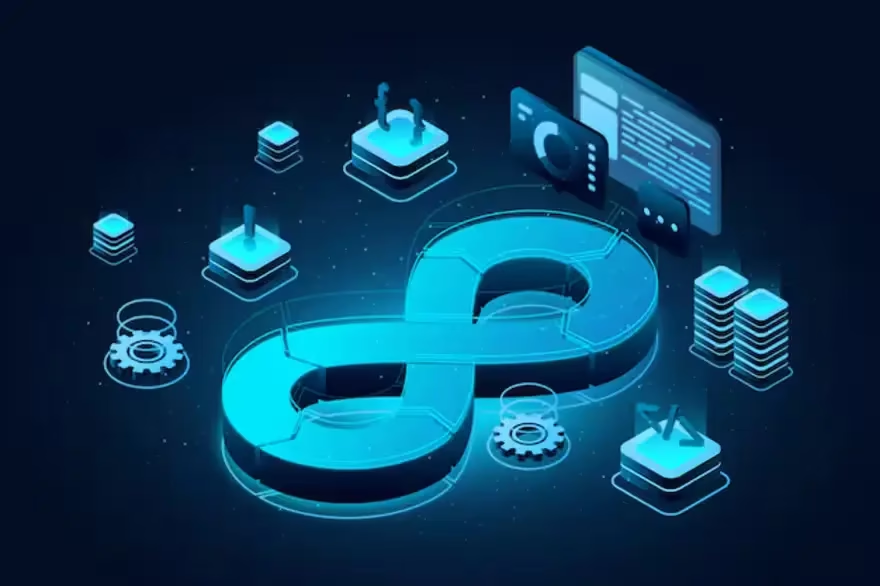



Continuous observability across servers, containers, and cloud resources using Prometheus, Grafana, and Datadog. Real-time alerting detects anomalies before they escalate, ensuring uptime targets above 99.9 percent for mission-critical applications and workloads.

Ongoing optimization of Jenkins, GitLab CI, GitHub Actions, and Azure Pipelines workflows. We resolve build failures, reduce pipeline execution time, and implement automated rollback strategies to keep your continuous delivery engine running without interruption or bottlenecks.
Sustained management of Terraform, Ansible, and CloudFormation configurations to prevent drift, enforce compliance, and enable repeatable provisioning. Every infrastructure change is version-controlled, peer-reviewed, and tested before production deployment.

Kubernetes cluster management including node scaling, pod health monitoring, Helm chart maintenance, and namespace governance. We handle cluster upgrades, resource quota tuning, and service mesh configuration to maintain resilient container orchestration at scale.

Proactive vulnerability scanning, OS-level patching, and dependency updates across your entire stack. We integrate security into your pipeline through automated SAST and DAST tooling, ensuring DevSecOps compliance without slowing down your release cadence.

Continuous analysis of cloud spend across compute, storage, and networking. We right-size instances, implement reserved capacity strategies, and eliminate idle resources to reduce monthly cloud bills by up to 35 percent while maintaining performance baselines.

Structured incident response with defined escalation paths, root cause analysis, and post-incident reviews. We use PagerDuty and Opsgenie integrations to ensure critical alerts reach the right engineers within minutes, minimizing business impact during outages.

SRE practices including error budget management, SLO definition, chaos engineering, and capacity planning. We embed reliability into your development workflow so teams ship confidently, backed by measurable uptime commitments and automated recovery protocols.

Automated backup scheduling, cross-region replication, and disaster recovery runbook creation. We test failover procedures quarterly, validate recovery point objectives, and ensure business continuity through documented, rehearsed restoration workflows across all environments.

Banks and fintech firms require zero-tolerance uptime for payment processing and trading platforms. Our DevOps monitoring services ensure regulatory compliance, PCI-DSS adherence, and real-time fraud detection pipeline maintenance with sub-second alerting and automated incident response protocols.

Healthcare organizations handle sensitive patient data under HIPAA regulations. We provide DevOps infrastructure management for electronic health records, telemedicine applications, and clinical trial platforms, ensuring encrypted data pipelines and audit-ready deployment histories across hybrid cloud environments.

Online retailers face traffic surges during seasonal peaks and flash sales. Our cloud DevOps support includes auto-scaling configuration, CDN optimization, and CI/CD pipeline maintenance to ensure checkout systems remain responsive during high-demand periods without degradation.

SaaS companies depend on rapid feature delivery and platform stability. We manage Kubernetes cluster operations, implement blue-green and canary deployment strategies, and provide site reliability engineering services that maintain 99.99 percent availability for subscription-critical platforms.
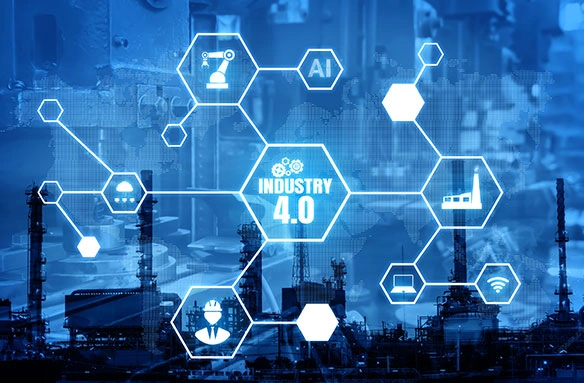
Connected factories generate massive telemetry data requiring real-time processing. Our DevOps automation support extends to edge computing infrastructure, IoT gateway maintenance, and predictive analytics pipeline management, ensuring uninterrupted operations across distributed manufacturing networks.

Digital learning platforms must handle concurrent user loads during exam periods and enrollment windows. We deliver DevOps support for enterprise applications including LMS hosting, video streaming infrastructure, and student portal backend maintenance with capacity-aware scaling.

Supply chain platforms require always-on tracking and inventory management systems. Our DevOps managed services cover microservices orchestration, API gateway maintenance, and real-time event streaming infrastructure that powers visibility across global logistics operations.

Streaming and content delivery platforms need low-latency infrastructure worldwide. We handle container orchestration support for transcoding pipelines, content management systems, and ad-serving platforms, ensuring seamless viewer experiences across devices and regions.

Government agencies require FedRAMP-compliant infrastructure and secure deployment pipelines. Our DevOps support includes infrastructure as code maintenance for sovereign cloud environments, zero-trust networking configurations, and compliance-driven CI/CD workflows for citizen-facing applications.

Utility providers operate critical grid management and SCADA systems. We deliver 24/7 DevOps monitoring and incident response for operational technology environments, ensuring rapid failover, secure patch deployment, and continuous availability of energy distribution platforms.
Banks and fintech firms require zero-tolerance uptime for payment processing and trading platforms. Our DevOps monitoring services ensure regulatory compliance, PCI-DSS adherence, and real-time fraud detection pipeline maintenance with sub-second alerting and automated incident response protocols.
Healthcare organizations handle sensitive patient data under HIPAA regulations. We provide DevOps infrastructure management for electronic health records, telemedicine applications, and clinical trial platforms, ensuring encrypted data pipelines and audit-ready deployment histories across hybrid cloud environments.
Deep engineering capabilities across cloud platforms, automation frameworks, and reliability practices powering production-grade DevOps maintenance.
Certified expertise across AWS, Microsoft Azure, and Google Cloud Platform for compute, networking, and storage management. We architect and maintain hybrid and multi-cloud environments using Terraform and Pulumi, delivering consistent governance and cost control across providers.
Production-grade Kubernetes cluster management including EKS, AKS, and GKE deployments. Our engineers handle Helm chart versioning, Istio service mesh configuration, pod autoscaling, and namespace isolation to maintain container orchestration support at enterprise scale.
End-to-end pipeline design using Jenkins, GitLab CI, GitHub Actions, ArgoCD, and Azure DevOps. We implement trunk-based development workflows, automated testing gates, artifact management, and deployment strategies that reduce lead time from commit to production.
Full-stack observability using Prometheus, Grafana, ELK Stack, Datadog, and New Relic. We build custom dashboards, configure intelligent alerting rules, and implement distributed tracing to provide complete visibility into application performance and infrastructure health.
Terraform, Ansible, Chef, and CloudFormation expertise for automated provisioning and configuration drift prevention. Every infrastructure change follows GitOps workflows with pull-request reviews, policy-as-code validation, and automated compliance scanning before deployment.
Security embedded across the pipeline using Snyk, Trivy, SonarQube, and HashiCorp Vault. We automate vulnerability scanning, secrets management, and compliance reporting for SOC 2, HIPAA, PCI-DSS, and GDPR requirements within your DevOps security patching workflows.
Machine learning-driven anomaly detection, predictive alerting, and automated remediation using Moogsoft and BigPanda integrations. AIOps reduces alert noise by up to 90 percent, enabling teams to focus on genuine incidents rather than false positives.
Internal developer platform design using Backstage, Crossplane, and custom golden path templates. We streamline developer onboarding, standardize service creation, and reduce cognitive load so engineering teams ship features instead of fighting infrastructure.
A proven global partner delivering resilient infrastructure, measurable uptime, and engineering excellence for complex DevOps environments.
TAV Tech Solutions has earned several awards and recognitions for our contribution to the industry


No posts found.
This guide helps technology leaders, engineering managers, and procurement teams evaluate DevOps support and maintenance services effectively. Use it to assess readiness, compare providers, and structure engagements that deliver measurable operational improvements.
Start by auditing your current operational maturity. Document incident frequency, average resolution times, deployment cadence, and infrastructure sprawl. Organizations experiencing more than two unplanned outages monthly or deploying less than weekly typically benefit most from outsourced DevOps maintenance. Evaluate whether your internal team spends over 40 percent of their time on operational toil versus feature development.
Establish clear SLAs before engaging any provider. Specify acceptable response times for critical, major, and minor incidents. Define uptime targets for production versus staging environments. Agree on escalation paths and communication channels. Strong SLAs should include financial penalties for missed targets and quarterly review cycles to adjust baselines as your infrastructure evolves.
Ask providers to demonstrate expertise with your specific stack, not just general cloud knowledge. Request case studies involving your cloud platform, container orchestration tooling, and CI/CD frameworks. Evaluate their DevOps pipeline optimization services track record. Verify certifications, assess team composition, and confirm whether support engineers have production-level experience with incident resolution rather than only consulting or advisory backgrounds.
Choose between dedicated team, shared pool, or hybrid engagement models based on your infrastructure scale and budget. When you hire DevOps support team resources through a dedicated model, it suits enterprises running 50+ production services. Shared pools work well for startups and mid-market companies. Ensure contracts allow scaling up during product launches and scaling down during stable periods without punitive exit clauses.
Track improvements across four DORA metrics: deployment frequency, lead time for changes, mean time to recovery, and change failure rate. Organizations that outsource DevOps maintenance should quantify downtime cost reduction by multiplying prevented outage hours by revenue-per-hour figures. Factor in engineering productivity gains by measuring the reduction in operational toil hours redirected to feature development.
Avoid creating permanent dependency on external providers. Require documented runbooks, architecture diagrams, and operational playbooks as standard deliverables. Schedule quarterly knowledge transfer sessions where provider engineers train your internal team on advanced troubleshooting. The right partner builds your team’s capability while maintaining support coverage.
A standard engagement covers 24/7 infrastructure monitoring, CI/CD pipeline maintenance, incident response, security patching, performance optimization, backup management, and monthly operational reporting. Scope varies based on your infrastructure complexity and selected service tier.
Most engagements reach active monitoring within two to four weeks. The first week focuses on infrastructure discovery and documentation. The second week establishes alerting baselines and runbooks. Weeks three and four involve shadowed operations before full handoff.
Common models include fixed monthly retainers for defined scope, hourly-rate engagements for ad-hoc support, and tiered packages scaling with infrastructure size. Enterprise clients often negotiate custom SLA-driven pricing tied to uptime guarantees and incident response commitments.
Security is embedded through automated vulnerability scanning, secrets management using HashiCorp Vault, role-based access controls, and encrypted communication channels. All engineers undergo background checks and follow SOC 2 Type II compliant operational procedures.
Yes. Our engineers hold active certifications across all three major cloud platforms. We manage hybrid and multi-cloud infrastructures using platform-agnostic tools like Terraform and Kubernetes, ensuring consistent governance regardless of cloud provider combinations.
Critical incidents receive acknowledgment within 15 minutes and active engineering response within 30 minutes under our standard SLA. Enhanced tiers offer sub-10-minute response times with dedicated on-call engineers assigned exclusively to your environment.
Our DevOps pipeline optimization services focus on parallelizing test execution, caching dependencies, and eliminating redundant stages. Automated rollback mechanisms reduce deployment risk. Clients typically see 40 to 60 percent improvements in deployment frequency within the first quarter of engagement.
Yes. SRE practices including error budget tracking, SLO definition, chaos engineering exercises, and capacity planning are available as standard or add-on services. We align reliability goals with business objectives to balance innovation speed against stability requirements.
We support Kubernetes across managed services including Amazon EKS, Azure AKS, and Google GKE, along with self-managed clusters. Docker Swarm, Nomad, and OpenShift environments are also covered. Our container orchestration support includes cluster upgrades, scaling, and security hardening.
We implement drift detection using Terraform state management and policy-as-code tools like Open Policy Agent and Sentinel. Automated scans identify configuration deviations, and remediation workflows restore compliance within defined timeframes without manual intervention.
Absolutely. We are tool-agnostic and adapt to your existing CI/CD platforms, version control systems, project management tools, and communication channels. Integration typically requires minimal changes to your current workflows, preserving team velocity during transition.
Our portfolio spans financial services, healthcare, e-commerce, SaaS, manufacturing, logistics, media, government, education, and energy sectors. Each industry engagement incorporates domain-specific compliance requirements and operational patterns into the support framework.
We track DORA metrics including deployment frequency, lead time, MTTR, and change failure rate. Monthly dashboards include uptime statistics, incident categorization, cost optimization savings, and pipeline performance trends delivered through shared observability platforms.
DevOps consulting focuses on strategy, architecture design, and transformation planning. DevOps support and maintenance services handle ongoing operational tasks including monitoring, incident response, patching, and pipeline upkeep. Many organizations engage both for initial setup followed by sustained operations.
: Both models are available. Organizations looking to hire DevOps support team resources get dedicated named engineers assigned exclusively to their infrastructure. Shared pool models offer cost-efficient coverage suitable for startups and mid-market organizations with moderate operational demands.
We conduct monthly cloud spend reviews analyzing compute utilization, storage lifecycle, and reserved instance coverage. Recommendations include right-sizing, spot instance adoption, and automated shutdown policies. Clients typically achieve 20 to 35 percent cost reductions within six months.
Standard coverage includes automated backup scheduling, cross-region replication, and quarterly disaster recovery drills. We define and test recovery point objectives and recovery time objectives for each critical system, ensuring business continuity during outages or data loss events.
Yes. Kubernetes cluster management is a core offering. We handle version upgrades, node pool scaling, pod resource optimization, network policy enforcement, and ingress controller maintenance. Upgrades follow rolling strategies to eliminate downtime during cluster transitions.
We pre-configure auto-scaling rules, load testing protocols, and war-room procedures ahead of planned launches. Temporary support augmentation adds dedicated engineers during peak periods. Post-launch, we return to standard coverage levels and conduct performance retrospectives.
Standard engagements begin with a three-month minimum to allow proper onboarding, baseline establishment, and measurable improvement tracking. Companies that outsource DevOps maintenance benefit from month-to-month contracts available after the initial period, providing flexibility to adjust scope as operational needs evolve.
Let’s connect and build innovative software solutions to unlock new revenue-earning opportunities for your venture


We would love to hear from you

5th Floor, DLF Two Horizon Centre, DLF Phase 5, Gurugram, HR 122002


