Mobile Software Development Services
Build secure, scalable, and high-performing mobile softwares that accelerate revenue growth and strengthen customer engagement across every platform.
Build secure, scalable, and high-performing mobile softwares that accelerate revenue growth and strengthen customer engagement across every platform.
We deliver mobile software development services to enterprises, startups, and growth-stage businesses across North America, Europe, Asia-Pacific, and the Middle East.


Businesses today face mounting pressure to deliver frictionless mobile experiences. Customers expect speed, personalization, and reliability from every mobile touchpoint. Legacy systems and fragmented codebases slow release cycles. Without a structured mobile software development service approach, organizations lose market share to digitally agile competitors who ship faster and iterate smarter.
TAV Tech Solutions bridges this gap with end-to-end mobile software application development covering strategy, design, engineering, testing, and post-launch optimization. Our cross-functional teams build native iOS, native Android, and cross-platform applications using Swift, Kotlin, Flutter, and React Native. Every project follows agile sprints, DevOps pipelines, and automated QA to deliver production-ready softwares within predictable timelines and budgets.

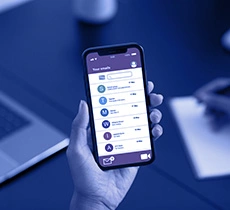


We build high-fidelity iOS apps using Swift and SwiftUI, optimized for Apple’s ecosystem. Each application follows Human Interface Guidelines and leverages Core ML, ARKit, and HealthKit to deliver seamless performance on iPhone, iPad, and Apple Watch devices.

Our Android team engineers robust apps with Kotlin and Jetpack Compose. We integrate Material Design 3 principles, Google Play services, and Firebase tools so your mobile software development company investment delivers consistent, battery-efficient experiences across thousands of device models.

Flutter enables single-codebase deployment to iOS, Android, web, and desktop. Our developers use Dart, custom widgets, and platform channels to produce pixel-perfect interfaces. This approach cuts costs by up to forty percent while preserving native-grade rendering and sixty-frame-per-second animations.

React Native lets teams share JavaScript logic across platforms without sacrificing native UI performance. We implement Hermes engine optimization, Reanimated animations, and Fabric renderer upgrades for smooth transitions, fast cold starts, and reduced app size in production environments.

PWAs combine web accessibility with app-like functionality. We build offline-first, installable web applications using service workers, Web Push APIs, and modern caching strategies. Businesses gain broader reach without app store dependencies while cutting acquisition costs significantly.

We extend mobile ecosystems to wearable devices and IoT endpoints. Our engineers develop companion apps for Apple Watch, Wear OS, fitness trackers, and connected hardware using Bluetooth Low Energy, MQTT, and real-time sensor data processing frameworks.

Reliable backends power every mobile experience. We design RESTful and GraphQL APIs, implement serverless functions on AWS Lambda and Azure Functions, and deploy containerized microservices. Each backend is built for horizontal scalability, low latency, and secure data transmission.

Great mobile products start with research-backed design. Our UX strategists conduct user interviews, competitive audits, and usability testing. Designers translate insights into interactive Figma prototypes validated through A/B experiments before a single line of code is written.

Our QA engineers execute functional, regression, performance, security, and accessibility testing. We use Appium, XCTest, Espresso, and cloud device farms to validate across real hardware. Automated CI/CD test pipelines catch defects early and protect release quality.

Cloud-native mobile architectures unlock elastic scale and reduced infrastructure overhead. We integrate AWS Amplify, Google Firebase, and Azure Mobile Apps for real-time databases, push notifications, authentication, and analytics. Each integration follows security best practices and compliance standards.
Large organizations need mobile governance frameworks. We implement MDM and MAM policies, single sign-on integrations, data encryption at rest and in transit, and remote wipe capabilities. Enterprise mobile software development services include compliance mapping for HIPAA, GDPR, SOC 2, and PCI-DSS.

Legacy mobile applications drain engineering resources. We assess existing codebases, identify technical debt, and execute phased migrations to modern frameworks. Modernization projects include architecture refactoring, dependency updates, UI overhauls, and performance optimization without disrupting active user bases.

Artificial intelligence elevates mobile experiences. We integrate on-device ML models using Core ML and TensorFlow Lite for image recognition, natural language processing, predictive analytics, and personalized recommendations. Edge inference keeps data private and response times under fifty milliseconds.
Post-launch success requires ongoing attention. Our mobile software support and maintenance services cover OS update compatibility, crash monitoring, performance tuning, security patching, and feature enhancements. Dedicated SLA-backed teams ensure uptime targets and rapid incident resolution around the clock.
Healthcare organizations need HIPAA-compliant mobile platforms for telemedicine, patient engagement, and clinical workflows. We build custom mobile software development solutions with encrypted video consultation, electronic health record integration, remote patient monitoring dashboards, and prescription management modules that improve care delivery and reduce administrative overhead.
Financial institutions demand secure, real-time mobile banking experiences. Our mobile software development team delivers biometric authentication, instant payment processing, AI-driven fraud detection, and portfolio management tools. We implement PCI-DSS compliance and end-to-end encryption to protect sensitive financial transactions across mobile channels.
Retailers use mobile apps to unify online and in-store experiences. We develop custom mobile software development features including personalized product recommendations, augmented reality try-on, loyalty programs, barcode scanning, and one-tap checkout. These capabilities increase average order value and customer lifetime retention.
Supply chain operators rely on mobile platforms for fleet tracking, warehouse management, and last-mile delivery coordination. We integrate GPS, geofencing, barcode scanning, route optimization, and real-time inventory synchronization. Mobile software development for startups in logistics accelerates market entry with lean MVP approaches.
EdTech companies need scalable mobile learning platforms. We build interactive course delivery systems, adaptive learning engines, live classroom streaming, gamification layers, and assessment tools. Our mobile software development agency approach ensures accessibility compliance and multilingual support for global student populations.
Travel brands differentiate through mobile convenience. We develop booking engines, dynamic pricing modules, loyalty wallets, digital concierge assistants, and offline itinerary access. Real-time push notifications for flight changes, gate updates, and local recommendations keep travelers informed and engaged throughout their journey.
Manufacturers digitize shop floor operations through mobile applications. We create asset tracking dashboards, predictive maintenance alert systems, quality inspection checklists, and IoT sensor monitoring tools. These solutions reduce downtime, improve safety compliance, and give plant managers real-time production visibility from any location.
Content platforms need high-performance streaming and engagement features. We build adaptive bitrate video players, social sharing integrations, content recommendation engines, in-app purchases, and DRM-protected media delivery. Our custom mobile software development services handle millions of concurrent users with low-latency architectures.
Real estate firms use mobile apps to streamline property search, virtual tours, mortgage calculators, and agent-buyer communication. We implement 3D walkthroughs, neighborhood analytics, document signing integrations, and CRM connectivity. Mobile-first lead capture increases conversion rates and shortens sales cycles significantly.
Utility providers deploy mobile platforms for smart meter monitoring, outage reporting, billing management, and energy consumption analytics. We build field service apps with offline data sync, GPS-based crew dispatch, and regulatory reporting tools. These solutions improve operational efficiency and customer satisfaction simultaneously.
Healthcare organizations need HIPAA-compliant mobile platforms for telemedicine, patient engagement, and clinical workflows. We build custom mobile software development solutions with encrypted video consultation, electronic health record integration, remote patient monitoring dashboards, and prescription management modules that improve care delivery and reduce administrative overhead.
Financial institutions demand secure, real-time mobile banking experiences. Our mobile software development team delivers biometric authentication, instant payment processing, AI-driven fraud detection, and portfolio management tools. We implement PCI-DSS compliance and end-to-end encryption to protect sensitive financial transactions across mobile channels.

Our engineers hold deep proficiency in Swift, SwiftUI, Objective-C for iOS and Kotlin, Jetpack Compose for Android. We leverage platform-specific APIs for camera, biometrics, NFC, and geolocation to unlock maximum device capability. This native expertise ensures your app exploits hardware acceleration, delivers optimal battery performance, and meets platform certification requirements.
We architect cross-platform solutions using Flutter and React Native with clean separation between shared business logic and platform-specific UI layers. Our modular approach enables incremental migration, independent feature deployment, and reusable component libraries. Engineering teams benefit from shorter release cycles and consolidated testing workflows.
Backend excellence defines mobile performance. We design serverless architectures on AWS, Azure, and GCP with auto-scaling, distributed caching, and event-driven processing. Our engineers implement GraphQL APIs, WebSocket real-time channels, and CDN-accelerated asset delivery. Every backend meets enterprise-grade security, uptime, and throughput requirements.
Continuous integration and delivery pipelines automate build, test, and deployment stages. We configure Fastlane, Bitrise, GitHub Actions, and Azure DevOps for automated code signing, beta distribution, and app store submission. Pipeline-driven workflows reduce release errors and enable daily deployment cadences for mobile software development firms.
Security spans the entire mobile stack. We implement certificate pinning, runtime application self-protection, code obfuscation, and encrypted local storage. Compliance frameworks including HIPAA, GDPR, PCI-DSS, and SOC 2 are embedded at the architecture level. Penetration testing and vulnerability scanning validate every release before production deployment.
On-device machine learning enables intelligent mobile experiences without cloud round-trips. We deploy Core ML, TensorFlow Lite, and ONNX Runtime models for real-time image classification, speech recognition, predictive text, and anomaly detection. Edge computing reduces latency, preserves data privacy, and lowers bandwidth costs for mobile software application development.
Data-driven optimization maximizes user retention. We instrument apps with Firebase Analytics, Mixpanel, and custom telemetry. Our team monitors crash rates, session durations, screen load times, and funnel conversions. Continuous performance profiling identifies memory leaks, jank frames, and network bottlenecks before they affect user satisfaction.
Inclusive design expands market reach. We implement WCAG 2.2 AA standards with VoiceOver, TalkBack, dynamic text sizing, and high-contrast mode support. Accessibility audits identify barriers for users with visual, auditory, motor, and cognitive needs. Accessible apps also improve SEO signals and meet regulatory requirements in the public sector.
Proven delivery excellence, deep platform expertise, and measurable business outcomes set us apart globally.
TAV Tech Solutions has earned several awards and recognitions for our contribution to the industry


No posts found.
This guide helps CTOs, product leaders, and procurement teams evaluate mobile software development services, compare engagement approaches, and make informed investment decisions. Whether you are launching a first mobile product or modernizing an existing portfolio, these six areas cover the strategic considerations that matter most.
The platform decision shapes budget, performance, and time-to-market. Native development in Swift for iOS and Kotlin for Android delivers peak performance, full API access, and the richest user experience. It suits apps demanding complex animations, hardware-intensive features, or platform-specific capabilities like ARKit or Android Auto. Cross-platform frameworks like Flutter and React Native share up to eighty percent of code across platforms. They reduce engineering costs and speed releases while delivering near-native performance. Hybrid approaches using web technologies inside native wrappers work for content-heavy apps with simpler interactions. Evaluate your feature requirements, performance expectations, budget constraints, and long-term maintenance roadmap before committing. The best companies for mobile software development help you model total cost of ownership across each approach before architecture decisions are finalized.
Selecting the right mobile software development firm requires structured assessment. Start with portfolio relevance. Has the provider built apps in your industry with comparable complexity? Examine case studies for measurable outcomes like load time improvements, conversion rate lifts, or user retention gains. Review technical depth across iOS, Android, and cross-platform stacks. Ask about their QA methodology, CI/CD maturity, and security practices. Check client references and independent review platforms. Top mobile software development companies maintain transparent communication, assign dedicated project managers, and provide detailed sprint reports. Engagement flexibility matters too. Can they scale from a small discovery phase to a full production team without contractual friction? A mobile software development services company should operate as an extension of your internal team, not a disconnected vendor.
Mobile software development outsourcing typically follows three pricing models. Fixed-price contracts suit well-defined projects with clear scope and deliverables. They provide budget certainty but offer limited flexibility for scope changes. Time-and-material engagements work for evolving products where requirements may shift during development. You pay for actual hours worked with full transparency into resource allocation. Dedicated team models provide ongoing engineering capacity for long-term product development. This approach suits organizations building continuous feature pipelines or maintaining complex mobile portfolios. When you outsource mobile software development, compare hourly rates across geographies but weigh communication quality, engineering maturity, and cultural alignment equally. The cheapest option rarely delivers the best return on investment. Outsourcing mobile software development services should prioritize sustainable quality over short-term savings.
Mobile applications process sensitive data including personal information, payment credentials, and health records. Security architecture must address authentication, data encryption, secure API communication, and code integrity. Multi-factor authentication, biometric login, and OAuth 2.0 token management form the baseline. Data-at-rest encryption using AES-256 and TLS 1.3 for data-in-transit protect against interception. Certificate pinning prevents man-in-the-middle attacks. Runtime application self-protection detects tampering and jailbreak environments. Compliance requirements vary by industry. Healthcare apps need HIPAA safeguards. Financial apps require PCI-DSS alignment. Any app serving European users must meet GDPR data processing standards. Enterprise mobile software development services integrate compliance checkpoints throughout the development lifecycle rather than retrofitting after launch.
Measurable outcomes drive mobile product accountability. Define key performance indicators before development begins. Common metrics include daily and monthly active users, session duration, screen load time, crash-free rate, app store rating, conversion funnel completion, customer acquisition cost, and lifetime value. Technical KPIs track API response times, push notification delivery rates, and background processing efficiency. Establish baseline measurements from existing channels and set realistic improvement targets. A structured mobile software development agency engagement includes instrumentation planning during the design phase. Analytics tools like Firebase, Amplitude, or Mixpanel capture behavioral data from day one. Quarterly business reviews compare KPI trends against product roadmap milestones to ensure ongoing alignment between engineering investment and business results.
Mobile products require continuous investment. Operating system updates, device fragmentation, evolving user expectations, and competitive pressure demand ongoing development. Build a twelve-to-eighteen-month product roadmap anchored to business milestones. Allocate engineering capacity across three streams: feature development for growth, technical debt reduction for stability, and innovation experiments for differentiation. Mobile software development for startups often begins with a minimum viable product followed by rapid iteration based on user feedback. Enterprise programs typically phase rollouts across departments, geographies, or user cohorts. Both approaches benefit from modular architecture that supports parallel workstreams. Partner with a mobile software development firm that provides continuous product advisory, not just project execution. Software mobile software development partnerships that extend beyond initial build yield significantly higher long-term product success rates. Evaluate providers based on roadmap advisory capability, not just software mobile software development execution speed.
We deliver end-to-end mobile software development services including strategy consulting, UI/UX design, native iOS and Android engineering, cross-platform development using Flutter and React Native, backend API engineering, quality assurance, app store deployment, and ongoing support. Our custom mobile software development services are tailored to your business goals, technical requirements, and budget parameters.
Custom mobile software development costs vary based on the complexity, platform choices, feature scope, third-party integrations, and compliance requirements. Simple softwares typically range from thirty thousand to seventy-five thousand dollars. Mid-complexity softwares cost between seventy-five thousand and two hundred thousand dollars. Enterprise-grade solutions with advanced features can exceed three hundred thousand dollars. We provide detailed estimates after a discovery workshop.
Timeline depends on scope and complexity. A minimum viable product takes eight to twelve weeks. Mid-range softwares require twelve to twenty-four weeks. Large enterprise projects may span six to twelve months. Our agile process delivers working increments every two weeks so you see progress early and can provide feedback throughout mobile software application development cycles.
Yes. We build native softwares for iOS using Swift and for Android using Kotlin. We also deliver cross-platform applications using Flutter and React Native when broader platform coverage at reduced cost is the priority. Our architects help you select the optimal approach based on performance needs, budget, and long-term maintenance considerations.
Absolutely. We operate as a trusted mobile software development outsourcing partner for organizations worldwide. Our distributed delivery model provides access to senior engineers, designers, and QA specialists across time zones. Dedicated project managers ensure transparent communication. You maintain full visibility into sprints, velocity metrics, and deliverables throughout the engagement.
We offer fixed-price contracts for well-defined projects, time-and-material billing for evolving requirements, and dedicated team models for continuous product development. Each model includes clear scope documentation, milestone tracking, and regular reporting. Whether you are outsourcing mobile software development services for the first time or scaling an existing partnership, our flexible approach lets you outsource mobile software development at the scale and pace that fits your business.
Security is embedded from architecture through deployment. We implement certificate pinning, code obfuscation, encrypted storage, biometric authentication, and OAuth 2.0 token management. Automated SAST and DAST scans run in every CI/CD pipeline. Penetration testing validates each release. Our enterprise mobile software development services include compliance mapping for HIPAA, GDPR, PCI-DSS, and SOC 2.
Yes. Our mobile software support and maintenance services cover continuous monitoring, crash analytics, OS compatibility updates, performance optimization, security patching, and feature enhancements. We offer tiered SLA packages with defined response and resolution times. Dedicated maintenance teams ensure your software stays healthy, secure, and aligned with evolving platform requirements.
We serve healthcare, banking, retail, logistics, education, travel, manufacturing, media, real estate, and energy sectors. Each vertical receives domain-specific expertise covering compliance requirements, user behavior patterns, and integration needs. Our mobile software development team brings sector knowledge that accelerates delivery and reduces risk.
We combine deep platform expertise with industry domain knowledge, agile delivery discipline, and post-launch accountability. Our ninety-three percent on-time delivery rate, flexible engagement models, global talent access, and security-first architecture differentiate us from generic mobile software development companies. Clients consistently rank us among the best companies for mobile software development based on measurable business outcomes, not just feature delivery.
Yes. Our mobile software development for startups program includes lean discovery workshops, MVP scoping, and phased delivery plans that align with funding milestones. We help startups validate market assumptions quickly with minimum viable products before committing to full-scale development. Flexible pricing models make enterprise-grade engineering accessible for early-stage companies.
Every project uses dedicated Slack channels, weekly sprint reviews, bi-weekly stakeholder demos, and real-time progress dashboards. Product owners join daily standups and backlog refinement sessions. Our mobile software development services company model ensures you never lose visibility into design decisions, engineering progress, or QA results at any stage.
We primarily use Flutter with Dart and React Native with TypeScript for cross-platform builds. Framework selection depends on performance requirements, team skills, and ecosystem maturity. Both frameworks deliver near-native rendering, hot reload for rapid iteration, and strong community support. Our architects recommend the optimal choice during discovery based on your specific constraints.
Yes. We assess existing mobile codebases for technical debt, architecture limitations, and performance bottlenecks. Modernization projects include framework migration, UI redesign, backend refactoring, dependency updates, and automated test implementation. Phased approaches minimize user disruption while progressively improving software quality, speed, and maintainability.
Our design process begins with user research, competitive analysis, and persona development. Information architecture and wireframes define navigation flows. High-fidelity prototypes in Figma undergo usability testing before development starts. Iterative design reviews throughout the build cycle ensure the final product meets accessibility standards and conversion targets.
We execute manual and automated testing across functional, regression, performance, security, and accessibility categories. Tools include Appium, XCTest, Espresso, and cloud device farms covering hundreds of real devices. Automated test suites run in CI/CD pipelines on every code commit. This strategy catches defects early and protects release quality consistently.
Yes. We integrate mobile softwares with ERP, CRM, HRMS, payment gateways, analytics platforms, and custom backend systems. Our engineers build RESTful and GraphQL APIs, implement webhook event architectures, and configure middleware for legacy system connectivity. Every integration follows security best practices and is validated through end-to-end testing.
Yes. We maintain a strong mobile software development services in India delivery capability with experienced engineering teams across multiple Indian technology hubs. As one of the established mobile software development companies in India, our centers provide cost-effective access to senior mobile engineers, QA specialists, and DevOps professionals. Combined with onshore project management, this model delivers premium quality at competitive rates.
Our mobile software development team combines certified platform specialists, domain consultants, and dedicated QA engineers. Average team tenure exceeds four years. Engineers participate in continuous learning programs covering emerging frameworks, AI integration, and security practices. This investment in talent translates to faster delivery, fewer defects, and higher code quality.
Contact us for a free consultation. We begin with a discovery workshop to understand your business objectives, user needs, and technical requirements. Our team delivers a project blueprint covering architecture recommendations, timeline estimates, resource plans, and budget projections. From there, we move into agile sprints that deliver working software within the first two weeks.
Let’s connect and build innovative software solutions to unlock new revenue-earning opportunities for your venture


We would love to hear from you

5th Floor, DLF Two Horizon Centre, DLF Phase 5, Gurugram, HR 122002


